Swamp Fever
This article first appeared in Offshore Yachting April/May 2002
In the Woody Allen Film Manhattan, the leading character Isaac talks about his favourite things and what makes life worth living. He cites the crabs at Sam Wo’s (a Chinese New York restaurant) as being up there with Cezanne, Louis Armstrong and Groucho Marx.
In Queensland recently, 71 mud crabs bound for the boiling pot enjoyed a reprieve and were released into the Brisbane River in a mercy mission for the ailing Dalai Lama. A local Buddhist explained that the practice of liberating animals was a common Buddhist healing exercise of prayer for sick people.
So what is it about the crab, star sign of cancer, that captivates a lot of us? It certainly isn’t the ease of eating – ploughing and banging your way through all of that hard shell at the expense of cut fingers. And you don’t get nearly as much meat as you would from a lobster. But the rewards are worth it – that tiny bit of succulent white meat. There’s also something in the dictum ‘you only get out what you put in’ – when you’re eating crab, the rewards are great.
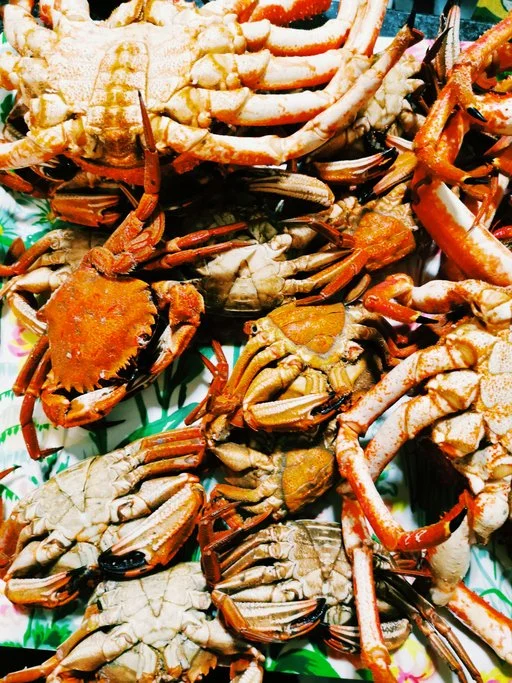
The crab itself is an adaptable little creature, finding itself on Italian menus in the guise of spanner crab linguini or the oriental version – salt and pepper mud crab. However, I like the Queensland mud crab (or Mangrove crab), which is reputed to be most delicious in the world.
Once on a trip to Rockhampton, a local told me about one of his favourite ways to spend a Saturday. He reckons nirvana is to get into a tinnie (an aluminium powerboat) with a couple slabs (two cartons of XXXX) and get into some muddies (start dropping pots). After a couple of slabs, the muddies become increasingly irrelevant.
The mud crab is best caught by setting baited crab pots and hoop nets (crab dillies). The other, harder option for catching muddies is with a hand line – once the weight of the crab is felt, you slowly bring it up to the boat. Not only will the crab provide a great meal, but there is a thrill in the chase – catching a crab goes hand in hand with lots of laughter.
In Queensland, the law now allows an individual a maximum of six crab pots on which to write their name. It is forbidden to keep female crabs, as each one kept means fewer crabs for us connoisseurs to enjoy later. Interestingly, the best months for catching crabs are those with an ‘r’ in them (that eliminates May, June, July and August). And, like all seafood, crabs are best eaten fresh, boiled for 12 minutes in seawater. Prior to that they should be kept in the freezer for 10 minutes (that way they go to sleep).
If you don’t have a mangrove swamp close by and instead have to resort to the local fish shop for your crab meat, then try the recipe above. Get cracking!