There’s no beef with a good steak
his article first appeared in The Weekend Australian March 11-12th 2006
Some people scour the globe for the perfect wave. I’d be happy to travel the planet in search of the perfect steak.
Last time I was in New York I asked a friend, a native, where to get a great steak in a traditional New York steak house. His response was “Ya gutta go to Sparks!” Sparks, in the heart of Manhattan, was the scene of a big mafia hit in 1985. One Friday afternoon in December, Paul Castellano, boss of the Gambino family, was shot six times in the head by rival John Gotti’s men while waiting outside this famous steakhouse. Somehow the mystique of this story wouldn’t be the same if the hit took place outside a tofu den.
Eating a steak is not as simple as it used to be when a barbecued or grilled rump would do, and if you were fancy you’d have a fillet. When you walk into a steak restaurant in Australia these days you are confronted by all sorts of cuts with all sorts of names. There’s rib-eye (also called scotch fillet or cube roll), eye fillet (also called tenderloin), rump (also known as top sirloin) and striploin (also called sirloin, New York or porterhouse). Then there’s T-bone and so on.
One Australian trying to create a steak culture in the great American chain tradition is Kingsley Smith. He has a steak restaurant (Kingsley’s Steak and Crabhouse in Sydney’s Woolloomooloo) and even owns the enviable website name www.steak.com.au. I ask him to explain some terms that lead to confusion when ordering steak.
First, wagyu. The steak world has gone mad over it. This is the expensive stuff and is the Western name for cattle that come from Japanese bloodlines. Wagyu from Japan are fed on, among other things, beer, kept in warm lights and traditionally give a massage to soother muscles. The best wagyu comes from the Japanese region around Kobe. Like real champagne, Kobe beef can’t be copied. However, thanks to artificial insemination, the strain is now mixed with local cattle.
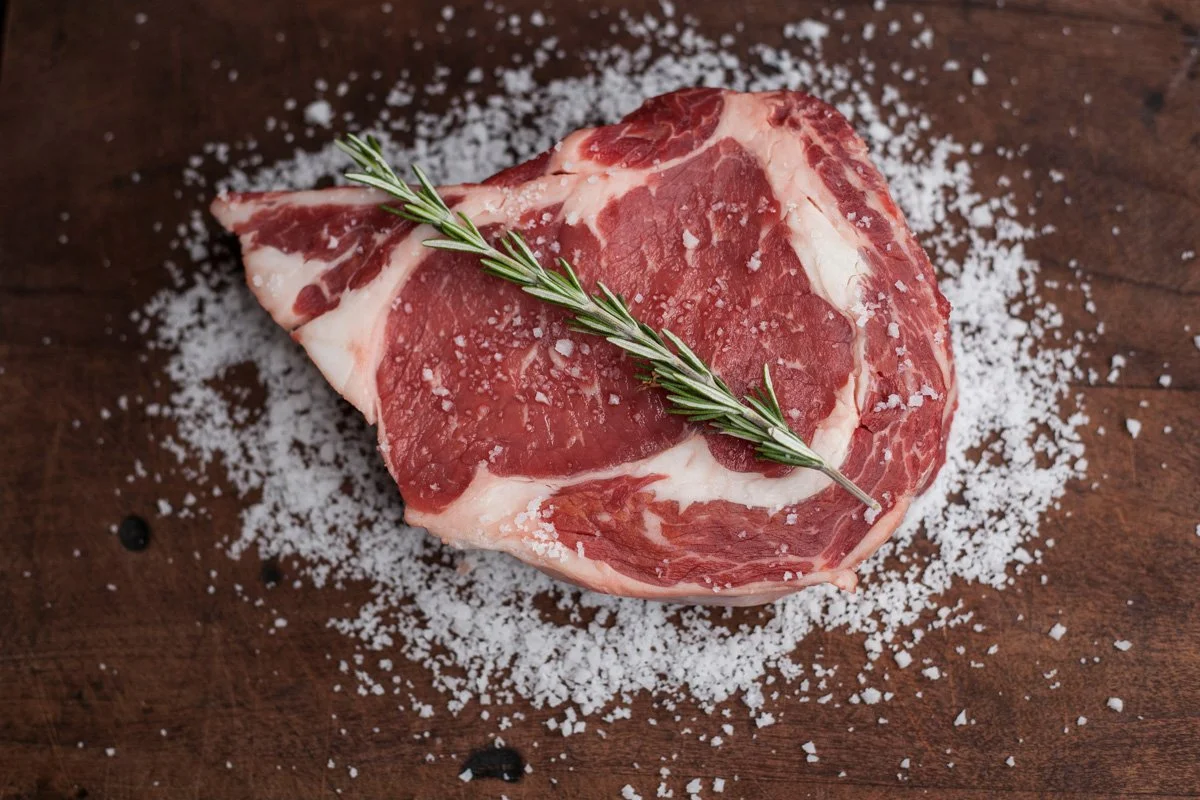
Second, marbling. Marbling refers to the little bits of fat that run through the steak. This intramuscular dispersion of fat gives juiciness and flavour. Generally, Smith aims for a marbling score of two, which is about the limit for a barbecued steak. However, some cuisines, such as French, go for marbling of six as braising is less intense, or an even more refined Japanese style could go for marbling of nine.
Another term is grain-fed. Cattle must be grain-fed for a minimum of 75 days to deserve that label. This means they are removed from pasture and taken to an area where they are fed a complex mix of ingredients, a bit like muesli for cattle. The longer they are fed this concoction the plumper they get. You pay for this. At Prime in Sydney, a 200g wagyu fillet that has been 400 days grain fed and has a marble score of six, costs $75.
If you don’t eat a lot of steak then make it an experience. New York cut is the best for me. I don’t touch the strip of fat but the taste permeates the meat. Then French fries: proper ones, long, thin and perfectly crisp. Have two lots of mustard handy, French and English. Also, to make yourself feel better about what you’re eating, order a green salad on the side. You don’t have to touch it, but it looks nice.
Finally, a bottle of red, Coonawarra cabernet will do. Preferably a 1990 or ’91 but a ’98 will suffice.
Just when I think I know everything about steak, an old friend arrives fresh from South America. “Tell me about Argentinian grills,” I say. “Oh, mate,” he says, “go to this traditional parrilla (basically an open barbecue restaurant) called La Brigada in Buenos Aires.” For me, there’s also steak-frites in a traditional Parisian bistro or the Carnivore charcoal grill pit in Nairobi. The search continues.